


A lesson from a small coffee roastery in Kochi
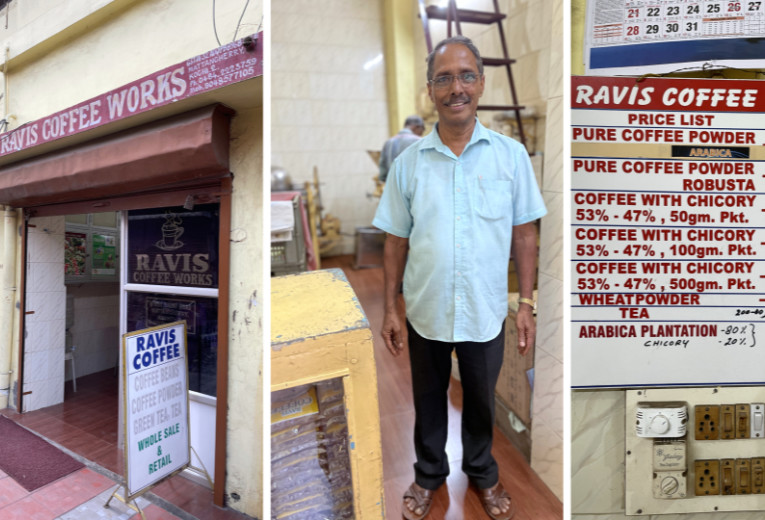
During my sabbatical, I found myself in Kochi in the south of India. One day, I stepped into a small, family-run coffee roastery called Ravis Coffee Works on a quiet street. There was nothing polished about the place. There were no carefully curated brand stories and no innovation slogans on the walls. Just a roasting machine, coffee beans and two people who clearly understood their craft.
I bought several packets. The aroma filled my suitcase on the journey home. The coffee tasted excellent, too. I also remember how clearly defined the offers were.
When less becomes enough
Ravis did not offer endless variations. There were only a few clearly defined and easy-to-understand options. Nothing felt excessive. Nothing was missing.
In many Western markets, innovation is often expressed through expansion. There are more features, more customisation and more choice. Complexity becomes a sign of progress.
But standing in that small shop, a different logic revealed itself. Innovation was about knowing what to leave out. There is a quiet confidence in simplicity. It suggests that decisions have been made, rather than avoided.
The meaning of Jugaad
In India, there is a term that encapsulates this mindset: jugaad.
It describes the creative use of limited resources to solve problems. This mindset is evident in everyday life, in small businesses and in improvised systems that function despite constraints.
Jugaad is all about making something work. It prioritises usefulness over refinement and progress over ideal conditions. It is a form of intelligence that emerges when there is no room for excess. Constraints boost creativity.
The hidden bias in how we think about innovation
In many organisations, innovation is viewed as a structured, investment-driven process. There are processes to follow, workshops to attend and budgets to secure. While all of these things can be valuable, they also reveal an underlying assumption: that innovation depends on resources.
Jugaad challenges this assumption in a subtle yet profound way. When resources are limited, a different kind of clarity emerges. People make decisions based on what is available. They take ownership because there is no alternative. The result may not always be perfect, but it is often effective.
Two ways of approaching innovation
What I observed in Kochi reflects a broader contrast. In resource-rich environments, innovation follows an optimisation path. Systems are improved, processes are refined and expansion is the goal.
In contrast, in resource-constrained environments, innovation tends to be more immediate. It is shaped by necessity, driven by action and guided by what can be achieved right now.
Neither approach is inherently better. However, many organisations are deeply rooted in the former and rarely experience the latter. This creates a blind spot.
What this means for leadership
The question for leaders is whether there is room for a different way of thinking alongside it. A space where solutions can be tested without needing to be perfect first. A space where simplicity is seen as a strength rather than a compromise.
This requires a shift in mindset. From control to trust. From completeness to clarity. From adding more to focusing on what matters.
A broader perspective
Many leadership ideas still predominantly travel from West to East. Methods, frameworks and models are exported on the basis that they represent the best approach. However, experiences like this suggest otherwise.
Some of the most practical and effective approaches to innovation emerge in environments where resources are limited. I think there is wisdom in that.
In what situations have you seen constraints unlock creativity in your work or elsewhere?